Modern physics has revealed a world that behaves very differently from what we experience in everyday life. At the quantum level, particles can exist in multiple states at once, remain connected across distances, and exhibit highly ordered patterns of behavior under specific conditions. One of the most intriguing of these phenomena is quantum coherence, a state in which particles move in synchrony, functioning as a unified system rather than as separate parts.
While quantum coherence is most often discussed in the context of physics laboratories and highly controlled environments, an emerging question continues to gain attention across disciplines: could there be a biological parallel within the human body?
To understand why this question matters, it helps to first consider what coherence represents. In physics, coherence refers to a state of order, alignment, and synchronization. When a system is coherent, its components are working together in a coordinated way. When coherence is lost, the system becomes disorganized, fragmented, and less efficient.
This concept, while rooted in physics, begins to sound familiar when viewed through the lens of human health. The body itself is a complex, dynamic system composed of interconnected processes. The nervous system, immune system, and cellular signaling networks are constantly communicating, adapting, and responding to internal and external stimuli. When these systems are functioning in harmony, the body tends to operate more efficiently. When that harmony is disrupted, symptoms can begin to appear.
In recent years, researchers have explored whether certain biological processes may exhibit coherence-like behavior. For example, studies in photosynthesis have demonstrated that plants can utilize quantum coherence to optimize energy transfer at the molecular level. Similarly, there has been discussion around whether microtubules within cells, as well as other biological structures, may support forms of coordinated activity that resemble coherence under specific conditions.
While these areas of research are still developing and far from conclusive in terms of human health applications, they open the door to a broader way of thinking about how the body may function as an integrated system. Rather than viewing the body purely as a collection of independent parts, there is growing interest in understanding how patterns of organization and communication contribute to overall function.
This perspective aligns with what many individuals experience when dealing with persistent or chronic conditions. Often, symptoms such as pain, fatigue, or dysfunction do not appear to have a single, isolated cause. Instead, they may reflect a pattern within the body that has become reinforced over time. Traditional approaches can be highly effective at addressing specific components, but in some cases, they may not fully resolve the underlying pattern.
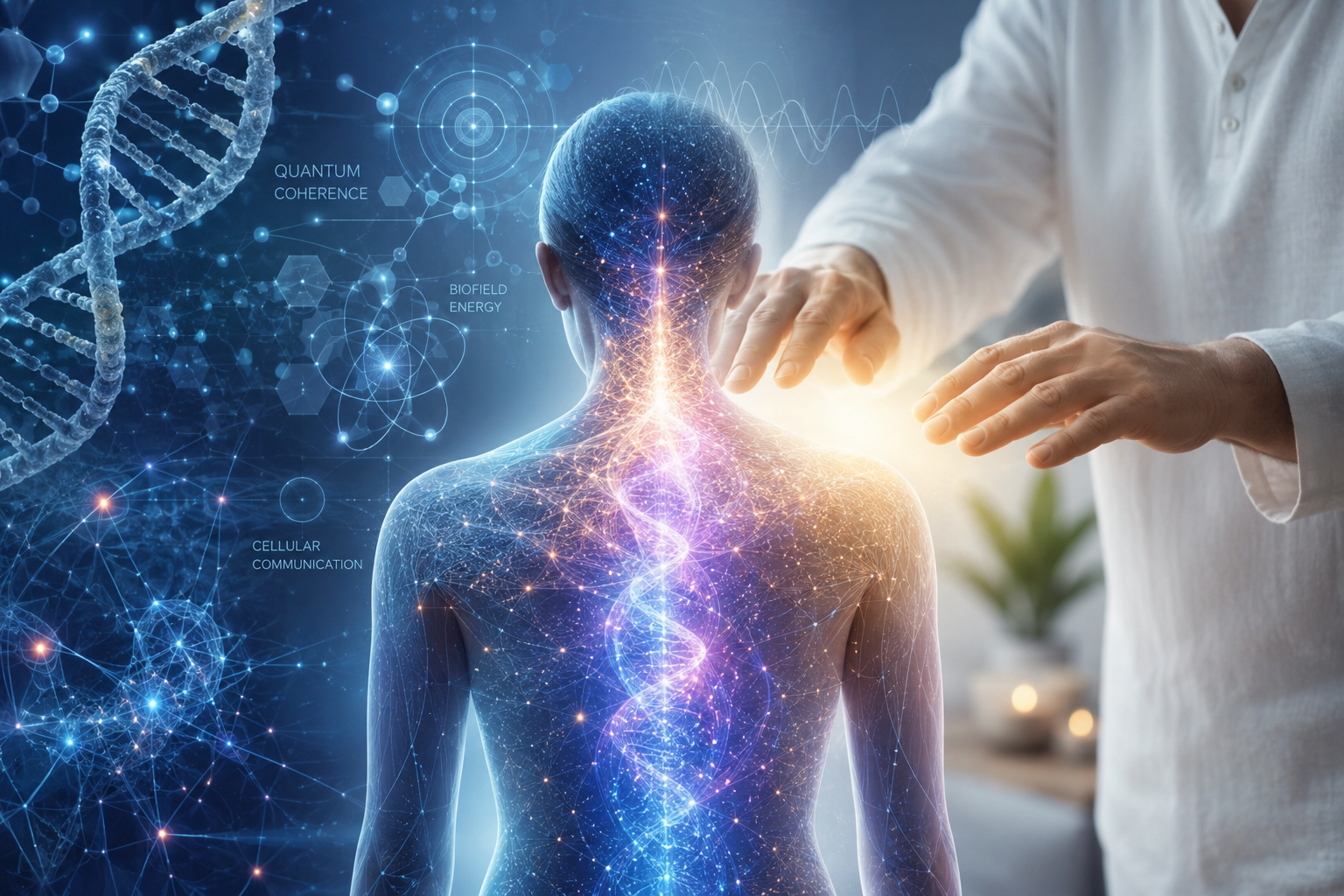
This is where alternative approaches, including energy healing, begin to enter the conversation in a meaningful way. Rather than focusing exclusively on physical structures, energy-based approaches are centered around the idea that the body operates as a system of interconnected signals and patterns. The goal is not to override the body, but to support it in restoring a more balanced and coordinated state.
From a scientific standpoint, it is important to be clear that quantum coherence in biological systems, particularly in relation to human health and healing, remains an area of ongoing exploration rather than established medical consensus. However, the broader concept of coherence as a state of organized function provides a useful framework for understanding why certain approaches may resonate with individuals who have not found success through conventional methods alone.
In practical terms, many people who explore energy healing report changes that are not easily explained by structural interventions alone. These may include shifts in how the body feels, reductions in tension, or a sense that something has “reset” at a deeper level. While subjective, these experiences point to the possibility that the body is capable of reorganizing itself in ways that are not yet fully understood.
The idea of supporting coherence, whether through stress reduction, nervous system regulation, or energy-based work, reflects a broader movement toward viewing health as a dynamic state rather than a fixed condition. It acknowledges that the body is constantly adapting, and that facilitating better communication within its systems may play a role in how individuals experience well-being.
Dr. Abel Rodriguez, D.C., brings over 50 years of experience working with individuals whose conditions often extend beyond simple explanations. Having treated more than 150,000 patients, his work is grounded in the understanding that the body does not always respond in linear or predictable ways. For many, especially those who feel they have exhausted traditional options, exploring a different perspective can be an important step forward.
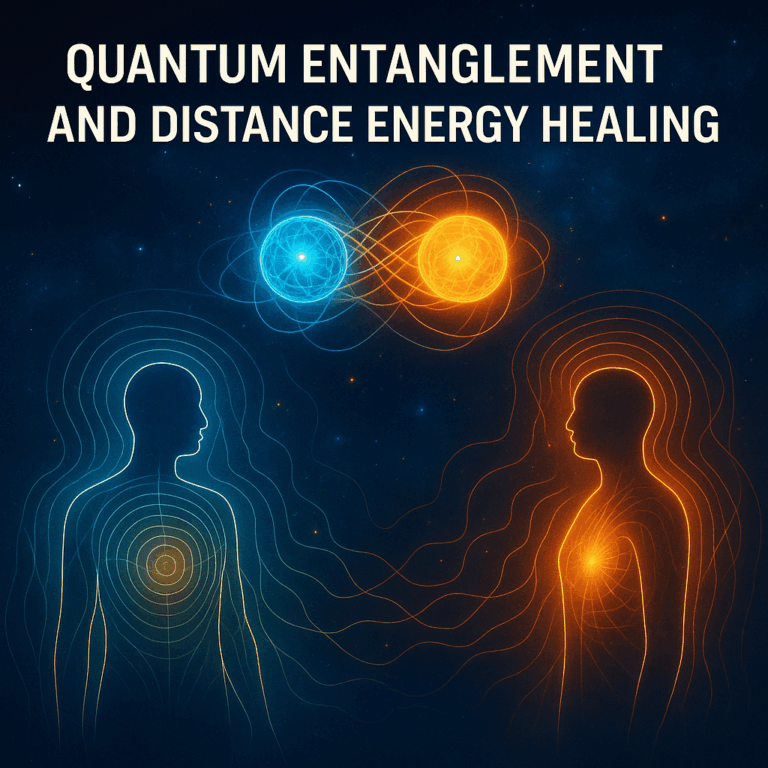
Distance energy healing, in particular, offers a way to engage with this approach without the limitations of location. While the mechanisms behind remote interactions are still being studied across various scientific fields, the concept of systems interacting beyond direct physical contact is not entirely foreign to modern physics. Again, this does not serve as proof of any specific healing outcome, but it does highlight that our current understanding of interaction and connection is still evolving.
Ultimately, the question of whether quantum coherence has a direct biological parallel in the human body remains open. What is clear, however, is that the body operates as a highly interconnected system, and that patterns of organization, communication, and balance play a critical role in how we experience health.
For individuals who feel that their condition has not been fully addressed, this perspective offers something different. Not a contradiction to existing knowledge, but an expansion of it. A way of looking at the body not just as a collection of parts, but as a system capable of change, adaptation, and, in some cases, meaningful improvement when approached from a new angle.